
You’re staring at mortgage rates, wondering if you should wait for them to drop. Meanwhile, your rent keeps climbing, and you’re watching potential homes slip away. So you’re caught between two fears: locking in a rate that feels too high or waiting too long to buy.
Here’s what makes this decision complicated: Interest rates are only one piece of the puzzle. You’re also weighing home prices, what you’re currently paying in rent, and how long you’re willing to put your life on hold. The truth is, there’s always a reason to wait, and there’s always a reason to buy now.
Let’s break down what you’re really choosing between.
The Hidden Cost of Waiting for Lower Rates
Here’s what waiting actually costs you in Arizona’s market. If you’re paying $1,800 monthly in rent, that’s $21,600 per year going to your landlord with nothing to show for it.
Let’s look at a real example. Say you’re eyeing a $550,000 home in Chandler. If home prices increase 4% while you wait for rates to drop, that same home will cost $572,000 next year. You’ll need an extra $22,000 for your down payment—plus you’ve already lost $21,600 in rent payments that could have been building equity.
Those numbers add up fast. Over three years of waiting, you could lose more than $64,800 in rent while watching your target home’s price climb $68,000 or more. That’s real money that disappears forever.
What Happens When Rates Drop?
When mortgage rates drop, buyer demand surges and home prices typically rise. Here’s the catch that most people don’t consider: Lower rates mean more people can suddenly afford to enter the market, creating intense competition that drives prices higher.
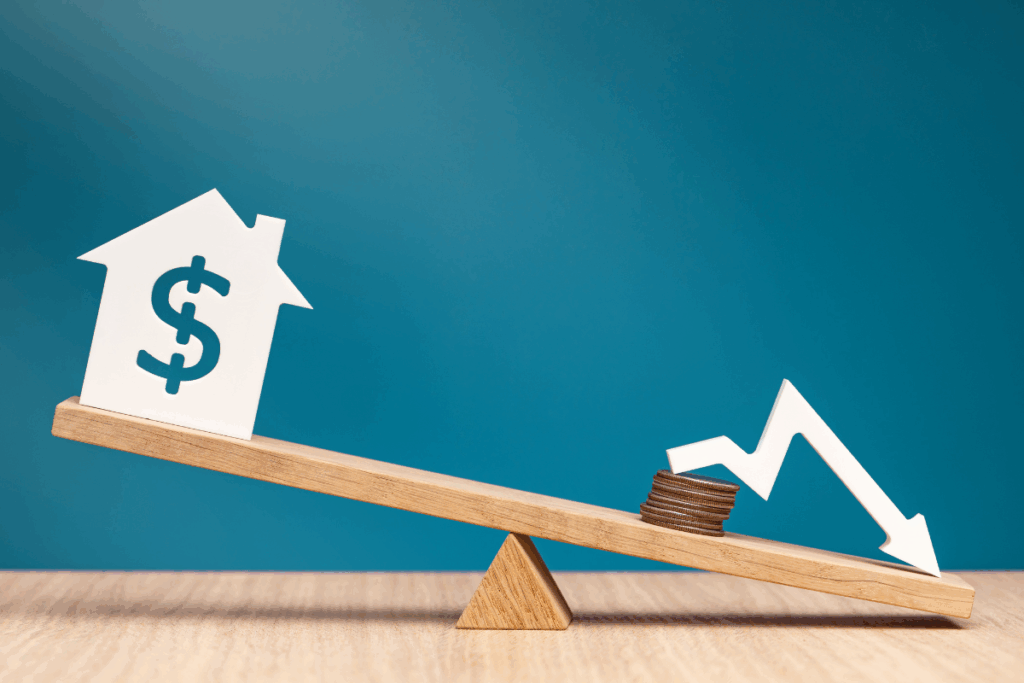
Think of it like a seesaw. As rates go down, prices typically go up. You might save $200 per month on a lower interest rate, but you could pay $20,000 more for the same house due to increased competition and rising prices.
How Does Arizona’s Growth Affect Your Wait-or-Buy Decision?
Arizona’s consistent population growth makes waiting riskier because steady demand supports price appreciation regardless of interest rate fluctuations. The Phoenix metropolitan area continues to attract new residents from California and other high-cost states. This migration pattern creates steady demand that supports price growth.
Inventory remains tight in desirable areas like Chandler, Scottsdale, and Gilbert. When rates drop and more buyers enter the market, you’ll face bidding wars and fewer choices. You might find yourself offering over the asking price just to compete, which can quickly eliminate any monthly savings you’d get from a lower rate.
What if You Could Buy Now AND Benefit from Lower Rates Later?
You can buy now and still benefit from lower rates later through a strategy called “Date the rate, marry the house.” That just means you buy the home you want at today’s prices and then refinance to a lower rate when conditions improve. But that’s just one approach. You have several ways to take control of your rate situation without sitting on the sidelines hoping for perfect market timing.
1. Buy down your rate with discount points.
You can pay upfront to lower your interest rate through discount points. One point typically costs 1% of your loan amount and reduces your rate by about 0.25%. On a $550,000 loan, paying $5,500 for one point might lower your rate from 6.5% to 6.25%, saving you over $33,000 in interest over 30 years.
2. Consider a shorter loan term.
15-year FHA loans typically offer rates 0.25% to 0.75% lower than 30-year loans. While the monthly payments are higher, you’ll pay far less interest and build equity much faster. If your budget allows it, this strategy can work in your favor whether rates are high or low.
3. Explore first-time homebuyer programs.
Arizona offers several programs designed to help buyers with limited savings. You can buy a home with as little as 1% down through certain programs. If you have cash sitting idle while you wait for market conditions to change, you might be able to put it to work immediately.
When Waiting Might Make Sense
There are legitimate situations where waiting to buy makes sense, but they have nothing to do with timing interest rates.
You should consider waiting if you’re actively working to improve a credit score below 620. Addressing the reasons homebuyers get denied before applying can save you money and stress. Most credit improvements take three to six months of focused effort, and that time is well-spent.
Wait if you’re facing job instability or planning to relocate within two years. You also shouldn’t rush into buying if you’re going through major life changes like divorce or serious illness that affect your financial stability.
Why Does Homeownership Build Wealth Even at Higher Rates?
Homeownership builds wealth even at higher interest rates because you’re accumulating equity with every payment while also benefiting from property appreciation, tax advantages, and fixed housing costs. Even with a higher interest rate, you’re building equity with every payment instead of enriching a landlord.
Your mortgage payment stays fixed (with a fixed-rate loan) while rents continue rising. In five years, you might still be paying $1,800 monthly while your neighbor who rented sees their payment jump to $2,400. You’re also benefiting from potential tax deductions and appreciation that build your net worth.
Frequently Asked Questions
Can I refinance later if rates drop after I buy?
Yes, you can refinance your mortgage if rates drop after you buy. Most homeowners who bought during higher-rate periods in the past eventually refinanced when rates declined. You’ll own the home you want at today’s prices while keeping the option to lower your payment later.
How much do interest rates affect my monthly payment?
Interest rates significantly impact your monthly payment, but waiting for lower rates can cost you more overall. The difference between a 6% and 7% rate on a $550,000 loan is about $305 per month. While that’s real money, one year of 4% price appreciation costs you $22,000 in additional purchase price. That’s equivalent to six years of that higher payment.
What credit score do I need to buy in Arizona?
You can buy a home in Arizona with a credit score as low as 580 for FHA loans with 3.5% down, or even 500 with 10% down. Conventional loans typically require a credit score of 620 or higher. If you’re close but not quite there, a few months of credit improvement is worth the wait.
Where Do You Start When You’re Ready to Buy?
Kyle Wright and his team at American Pacific Mortgage have helped thousands of Arizona families navigate the decision of when to buy. Our team in Chandler has access to an entire network of lenders, and we find the program that fits your specific needs, from FHA and VA loans to specialized first-time homebuyer programs and down payment assistance.
Our APM mobile app simplifies the process from application to closing, and our 24/7 support ensures that you’re never left wondering about next steps.
Don’t let uncertainty keep you from building wealth through homeownership. Contact us today at 480-690-2010 to get pre-qualified and discover your buying power. Your dream home is waiting—and it’s probably more affordable than you think, even with today’s rates.